
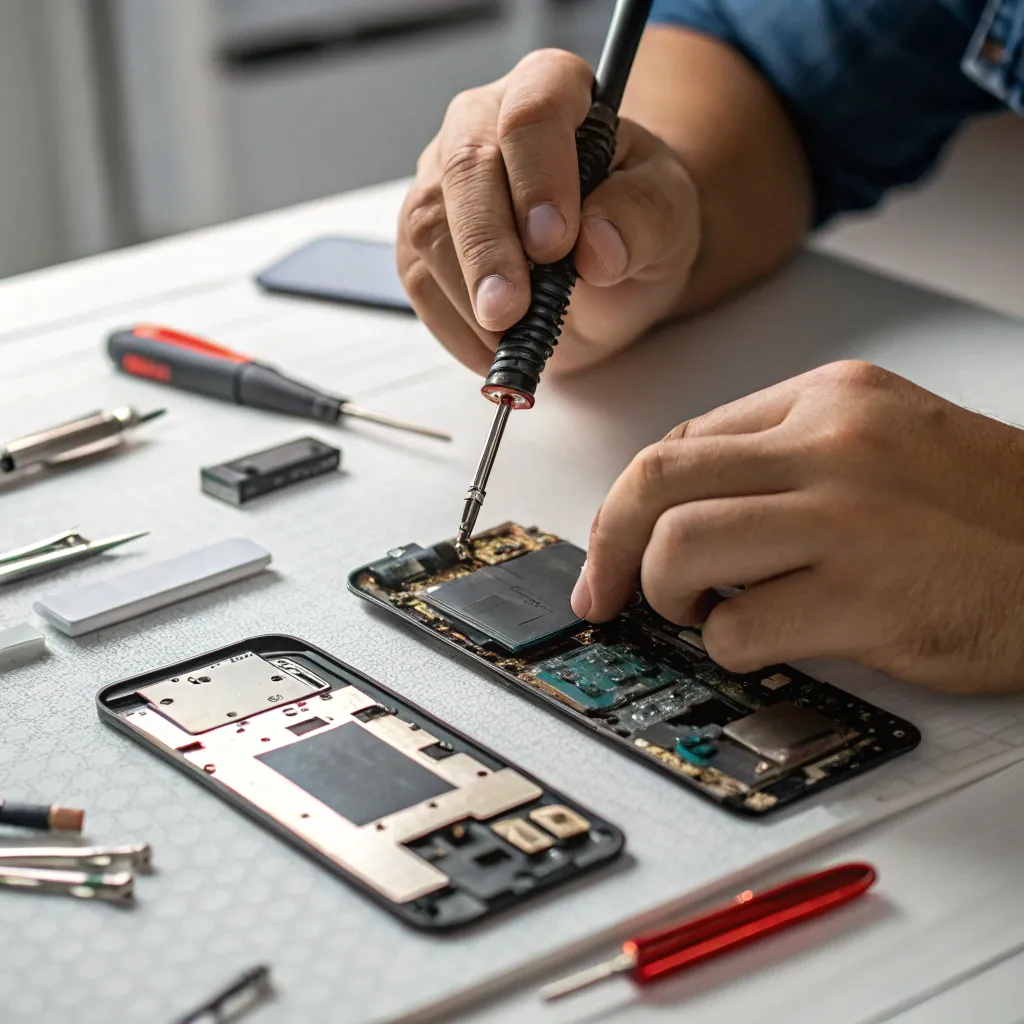
Your iPhone suddenly won’t turn on, and the diagnosis is a faulty logic board. The repair quote feels expensive, but buying a new phone costs even more. This leaves you stuck between two bad options.
Repairing an iPhone logic board is worth it for newer devices if the repair cost is under 30% of the phone’s current market value, especially when data recovery is important. For iPhones older than three years, the high risk of future failures often makes replacement a safer choice.
To make the right decision, you need to look beyond the repair price and consider long-term reliability, hidden risks, and how the phone will perform after repair.
How much does logic board repair really cost?
You may see very cheap logic board repair offers online, but the real cost is often higher than it looks at first glance.
Official Apple logic board repairs typically cost 40–50% of the phone’s original price. Third-party repairs are cheaper, but they only make sense if the total cost stays below 30% of the device’s current resale value.
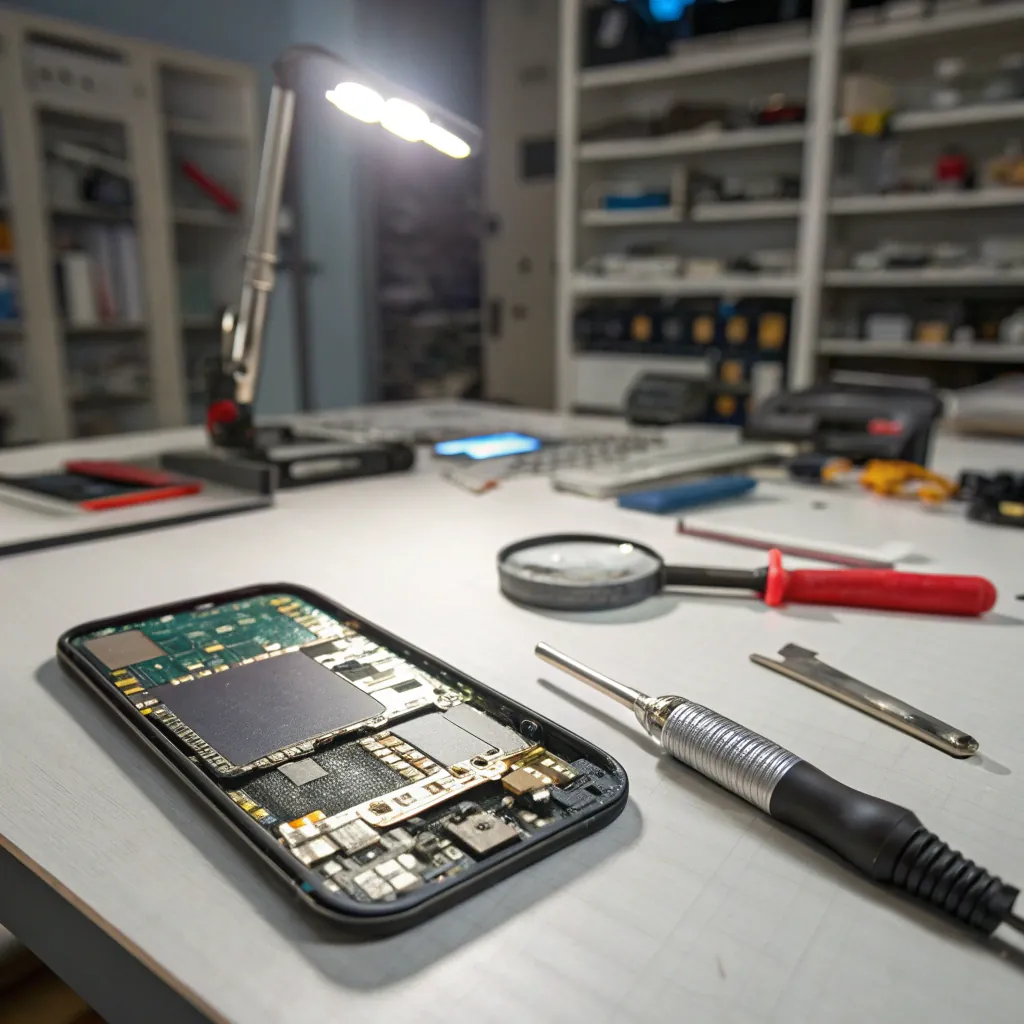
The gap between Apple repairs and third-party services is large. Apple charges more because the repair process is standardized and often replaces large assemblies. Independent repair shops focus on component-level fixes, which lowers cost but increases variability.
Comparing repair options:
| Feature | Official Apple Repair | Third-Party Repair |
|---|---|---|
| Cost | High (40–50% of original price) | Low to medium |
| Repair method | Module replacement | Component-level microsoldering |
| Warranty | Official Apple warranty | Limited or none |
| Data handling | Data often erased | Data usually preserved |
| Reliability | Very high | Depends on technician skill |
A simple rule helps avoid bad decisions: if a phone is worth $500 today, spending more than $150 on a logic board repair is financially risky.
Repairing an older iPhone may look affordable, but age introduces serious long-term risks.
On iPhones older than three years, components like capacitors and solder joints are already worn. The heat and stress of logic board repair can trigger new failures shortly after the repair.
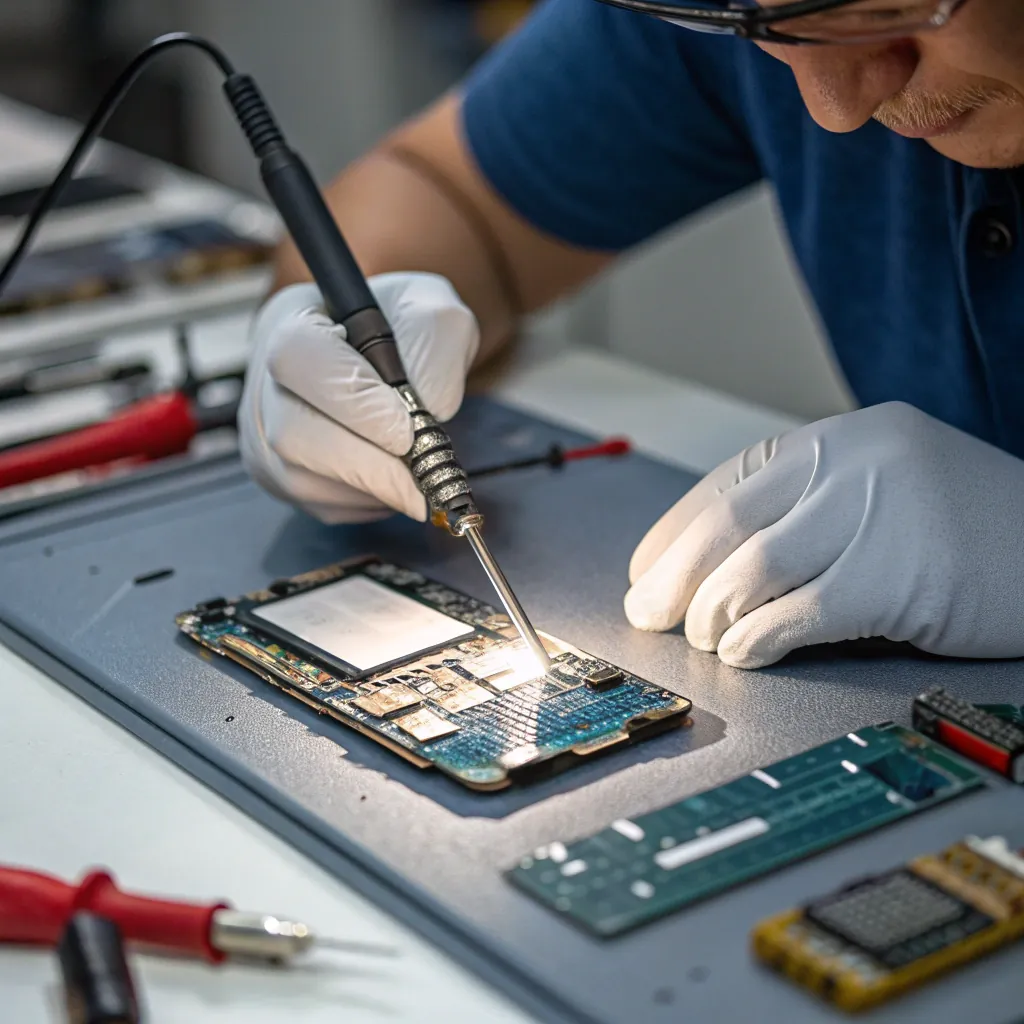
Fixing one failure doesn’t reset the age of the device. Other parts continue to degrade, sometimes faster after repair.
- Capacitor aging – Reduced electrical stability over time
- Solder joint fatigue – Heat can cause micro-cracks
- Battery degradation – Poor battery life after repair
- Storage wear (NAND) – Risk of data corruption or failure
| Device Age | Recommendation | Main Risk |
|---|---|---|
| 1–2 years | Repair recommended | Low secondary failure risk |
| 3–4 years | Repair with caution | High chance of new failures |
| 5+ years | Replacement advised | Repair rarely cost-effective |
Will a repaired iPhone perform like new?
Many users repair logic boards mainly to recover data. Performance after repair is a separate issue.
Logic board repair can restore usability and save data, but it rarely brings the phone back to factory-new performance. Overheating, instability, or reduced efficiency may appear, especially for heavy users.
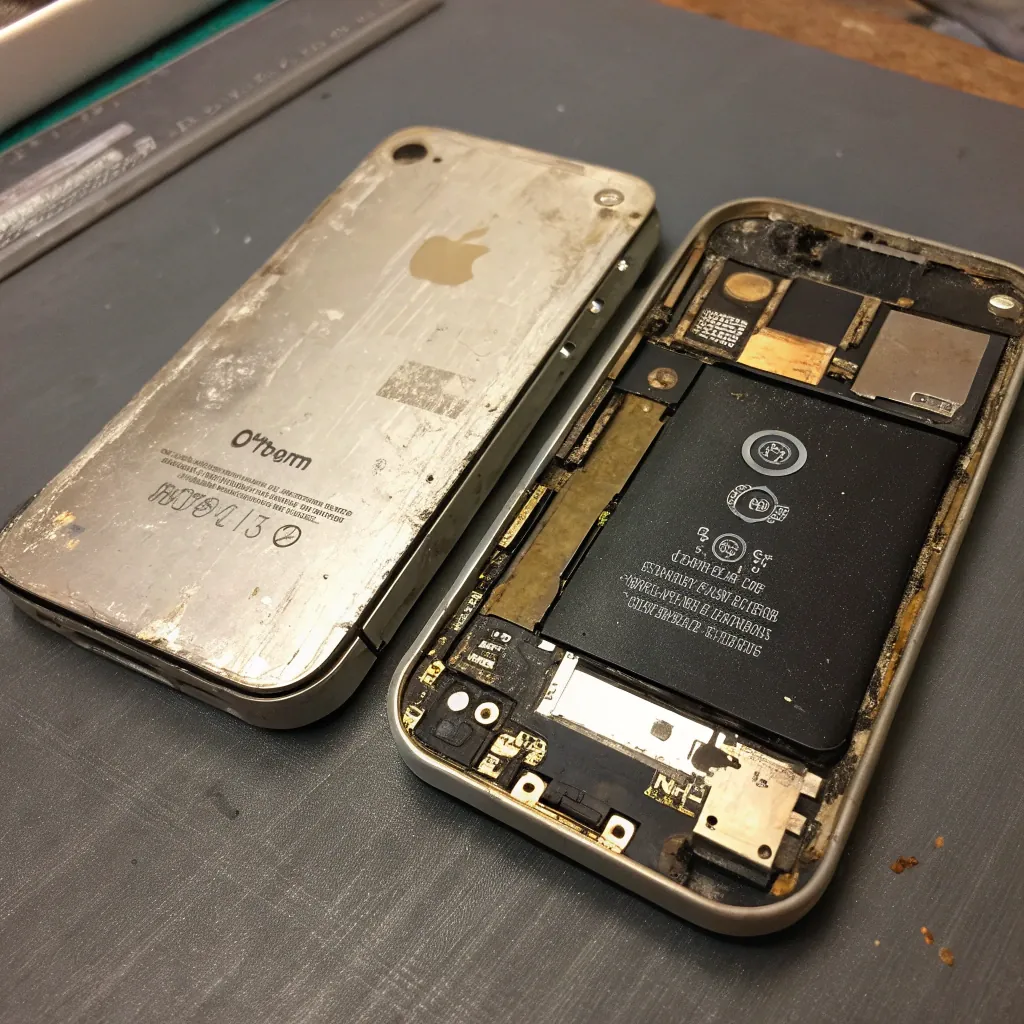
There is a big difference between “working” and “reliable.” Some repairs focus only on short-term functionality, while others aim for long-term stability.
Data recovery vs full repair:
- Logic board repair – Restores long-term usability, involves microsoldering
- Data recovery only – Extracts files, phone may remain unusable afterward
Post-repair performance varies by usage type:
| User Type | Typical Experience After Repair |
|---|---|
| Gamer / power user | Possible overheating, throttling, reboots |
| Business user | Generally stable, occasional issues under load |
| Casual user | Usually no noticeable performance problems |
If the phone is mainly for messaging, calls, and light apps, a repaired logic board is often acceptable.
Conclusion
Whether logic board repair is worth it depends on the phone’s age, current value, and your priorities. For newer iPhones and data-critical situations, repair can make sense. For older devices, replacement is often the safer and more cost-effective decision in the long run.
