
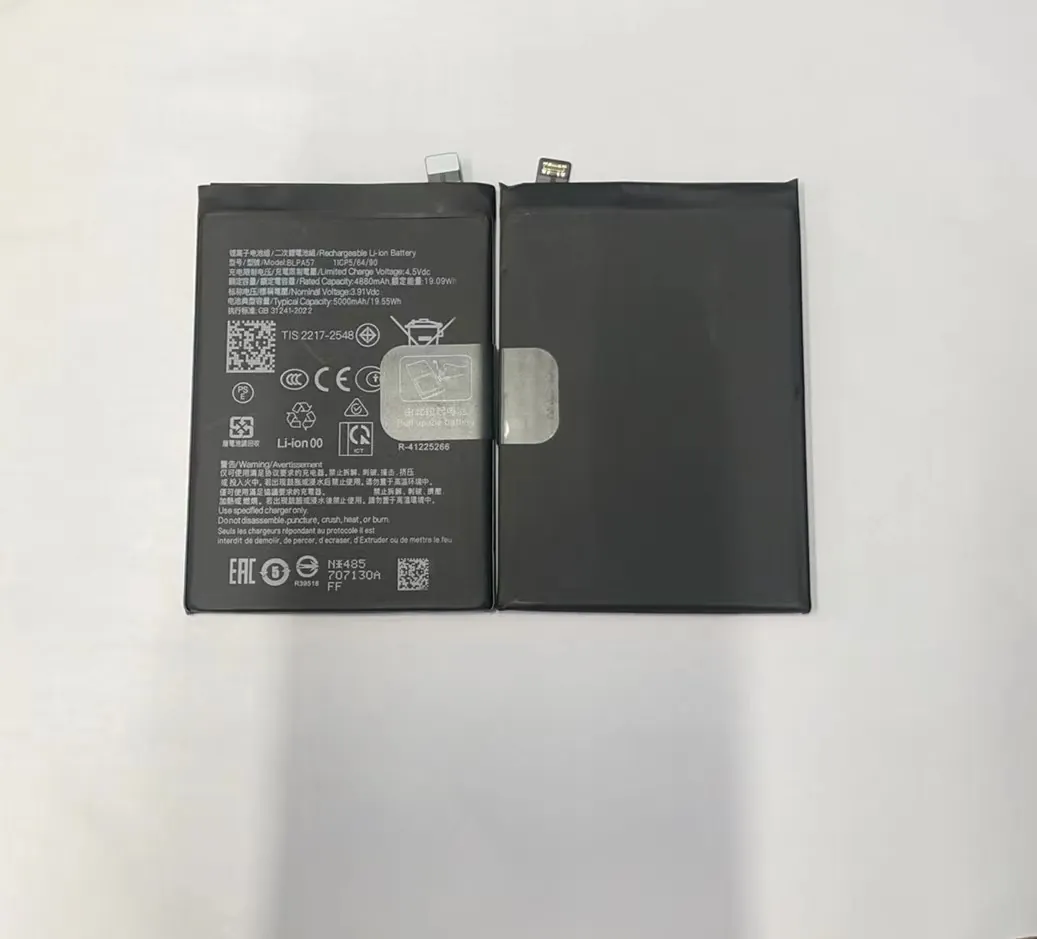
In mobile repair and wholesale business, we often face a common question: what battery voltages are used in phones?
Most mobile phone batteries use a nominal voltage of 3.7V or 3.8V, based on lithium-ion or lithium-polymer chemistry. Fully charged, they can reach up to 4.2V or 4.35V.
Battery voltage might seem technical, but it’s key for performance, safety, and compatibility. Knowing this helps avoid mismatches and improve the customer experience.
What defines nominal phone voltage?
Phone battery confusion often starts with one number—nominal voltage. Many customers believe it’s the charging voltage, but it’s not. So what does it really mean?
Nominal voltage is the average voltage a battery maintains during standard discharge. It helps determine circuit design, battery compatibility, and expected performance.

Nominal voltage is not the peak voltage or the minimum shutdown voltage. It sits between these extremes and represents the middle operating range of the battery. In most mobile batteries, this nominal value is either 3.7V or 3.8V.
Let’s break this down with a simple example.
What voltage numbers mean in real usage
| Voltage Label | Meaning | Typical Range |
|---|---|---|
| Nominal | Design average voltage | 3.7V / 3.8V |
| Full Charge | Max voltage after charging | 4.2V / 4.35V |
| Discharged | Voltage when battery is "empty" | 3.0V – 3.2V |
In practice, a 3.7V nominal battery usually charges up to 4.2V and discharges down to 3.0V. A 3.8V battery goes up to 4.35V when full.
Battery manufacturers use this number to standardize battery labeling. It also informs the phone’s power management system.
This voltage also connects to the battery chemistry. Lithium-ion and lithium-polymer cells have slightly different behavior, which we will cover later.
So, when you’re replacing or selling batteries, match not only the model and connector—but also the nominal voltage.
How do cells regulate voltage output?
Phone batteries are small, but the cells inside are doing a lot of work. Many people think the output is always the same. But how do the cells actually control the voltage?
Each lithium-based cell naturally changes voltage during discharge. Built-in protection circuits and battery management systems (BMS) help regulate this output for safety and consistency.
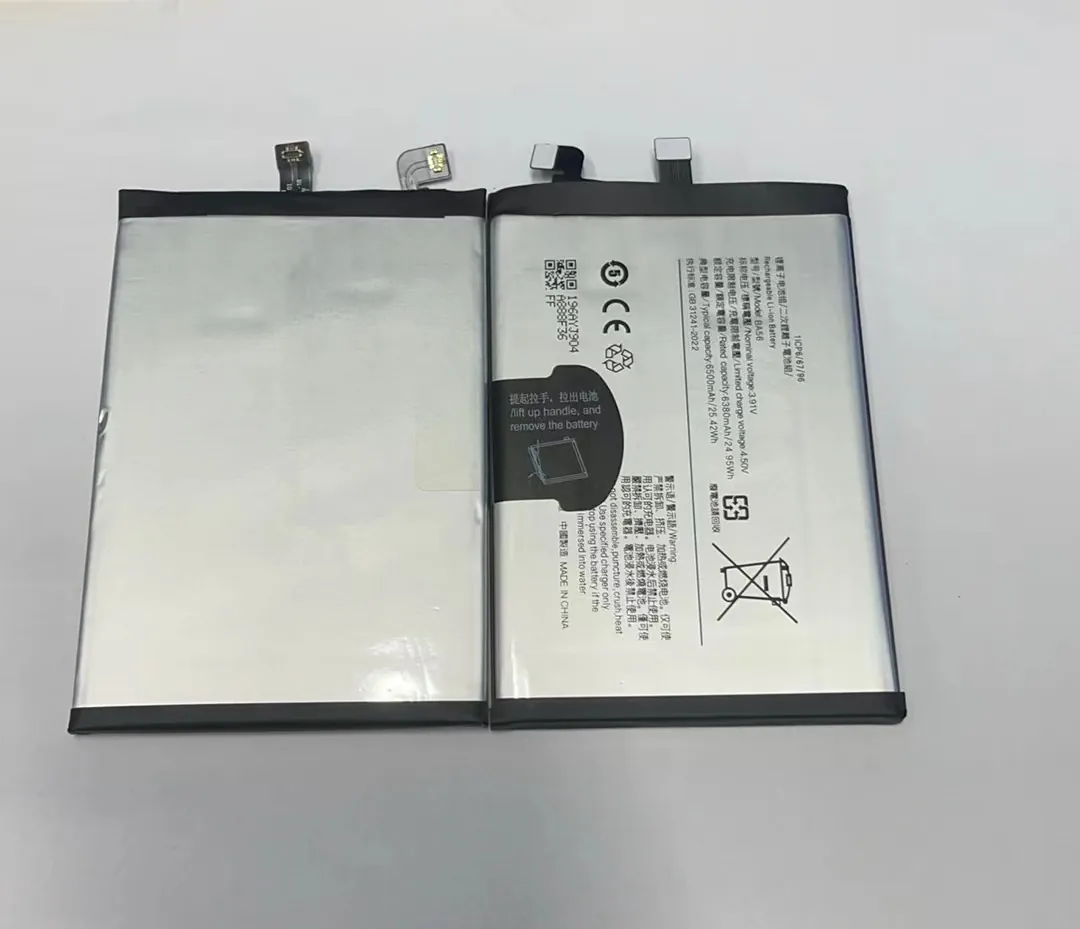
The voltage of a lithium-ion battery isn't fixed. It drops gradually as the phone is used. For example, when fully charged, a 3.7V battery starts at 4.2V and drops slowly until the phone shuts off around 3.0V.
Here’s how the control works inside:
Key internal components:
| Component | Function |
|---|---|
| Protection IC | Prevents overcharge, over-discharge, and short circuit |
| Fuel gauge chip | Estimates battery level based on voltage and current |
| Temperature sensor | Monitors overheating and triggers cut-off if needed |
| Balancing circuit | (In multi-cell packs) Ensures equal charge across cells |
The battery doesn’t do this alone. The phone’s motherboard also includes power management chips (PMICs) that adjust power demand and charging levels.
Most modern phone batteries have a BMS built into the battery pack itself. This ensures the voltage stays within the safe range, even if the charger or phone malfunctions.
Another important point: these circuits keep the battery operating in the "nominal" zone as long as possible. Once the voltage gets too low, the phone will shut off to avoid deep discharge damage.
When buying or recommending batteries, always check if the internal PCB and protection chips meet standards. A good battery isn’t just about capacity—it’s also about smart voltage control.
Why voltage differs across models?
Many customers ask why one phone uses a 3.7V battery and another uses 3.8V. Isn’t it all the same? Actually, no. There are clear reasons behind these differences.
Voltage differences across models are due to battery chemistry, power needs, and manufacturer design choices aimed at balancing safety, performance, and size.

Battery voltage is tightly linked to battery chemistry. Here are the two most common types in mobile phones:
Common phone battery types:
| Battery Type | Nominal Voltage | Max Voltage | Comments |
|---|---|---|---|
| Li-ion (Lithium Cobalt Oxide) | 3.7V | 4.2V | Older but still widely used |
| Li-poly (High Voltage variant) | 3.8V | 4.35V | Newer, higher energy density |
Some models are built with older Li-ion chemistry, which peaks at 4.2V. Newer models often use advanced Li-poly types that safely charge up to 4.35V.
That 0.1V difference in nominal voltage can mean up to 10% more energy stored in the same size. This matters a lot for slim phones with small battery space.
Other reasons voltage may vary:
- Processor power demand: More powerful chipsets may need slightly higher operating voltages.
- Display tech: High-refresh or OLED screens draw different current patterns.
- Charging strategy: Phones using fast charging may need higher voltage tolerance.
As a wholesaler, I always remind customers: never replace a 3.8V battery with a 3.7V one just because the connector fits. It could reduce performance or even damage the phone.
So, if you’re stocking batteries, clearly label voltage ratings and double-check model compatibility. Mismatches are one of the most common causes of returns.
Which factors affect voltage range?
Even if a battery says 3.7V, the actual voltage might vary day to day. So what affects the working voltage range?
Battery age, temperature, charge level, and load current all influence the real-time voltage a mobile battery delivers or receives.

A battery is never at a fixed voltage. It changes constantly based on how the phone is used. Here are some factors that cause variation:
1. Battery Age
As batteries get older, their internal resistance increases. This means under load, the voltage drops faster. Old batteries may shut off early or report wrong charge levels.
2. Temperature
Lithium batteries are sensitive to heat and cold. In very cold conditions, voltage may sag under use. In hot environments, voltage may stay high but increase risk.
3. Load Current
When the phone is under heavy load—like gaming or video streaming—the current draw increases. This causes a temporary voltage drop.
4. State of Charge (SoC)
Voltage naturally falls as the battery discharges. But the curve is not linear. Early drops are slow, then speed up near empty.
5. Charging Speed
Fast charging raises battery voltage more quickly. But it can also heat up the battery, which changes the internal behavior. That's why temperature sensors are so important.
Visualizing voltage vs. charge
Let’s look at a typical 3.7V battery curve:
| Charge Level (%) | Voltage (approx.) |
|---|---|
| 100% | 4.2V |
| 75% | 3.95V |
| 50% | 3.8V |
| 25% | 3.6V |
| 0% | 3.0V |
So even though it’s called a 3.7V battery, the actual operating range is between 3.0V and 4.2V.
This is why phones rely on smart battery software to interpret voltage correctly. Without that, your 30% battery might actually be only 5% in reality.
As a supplier, I always tell customers: never test a battery only by measuring voltage. You also need to check capacity, resistance, and charge cycle count to know the real health.
Conclusion
Phone batteries mainly use 3.7V or 3.8V nominal voltage, with working ranges from 3.0V to over 4.2V. This voltage varies by model, chemistry, and usage conditions. Understanding this helps avoid errors and supports better battery performance.
